A Log Is Not a Cylinder
A Log Is Not a Cylinder
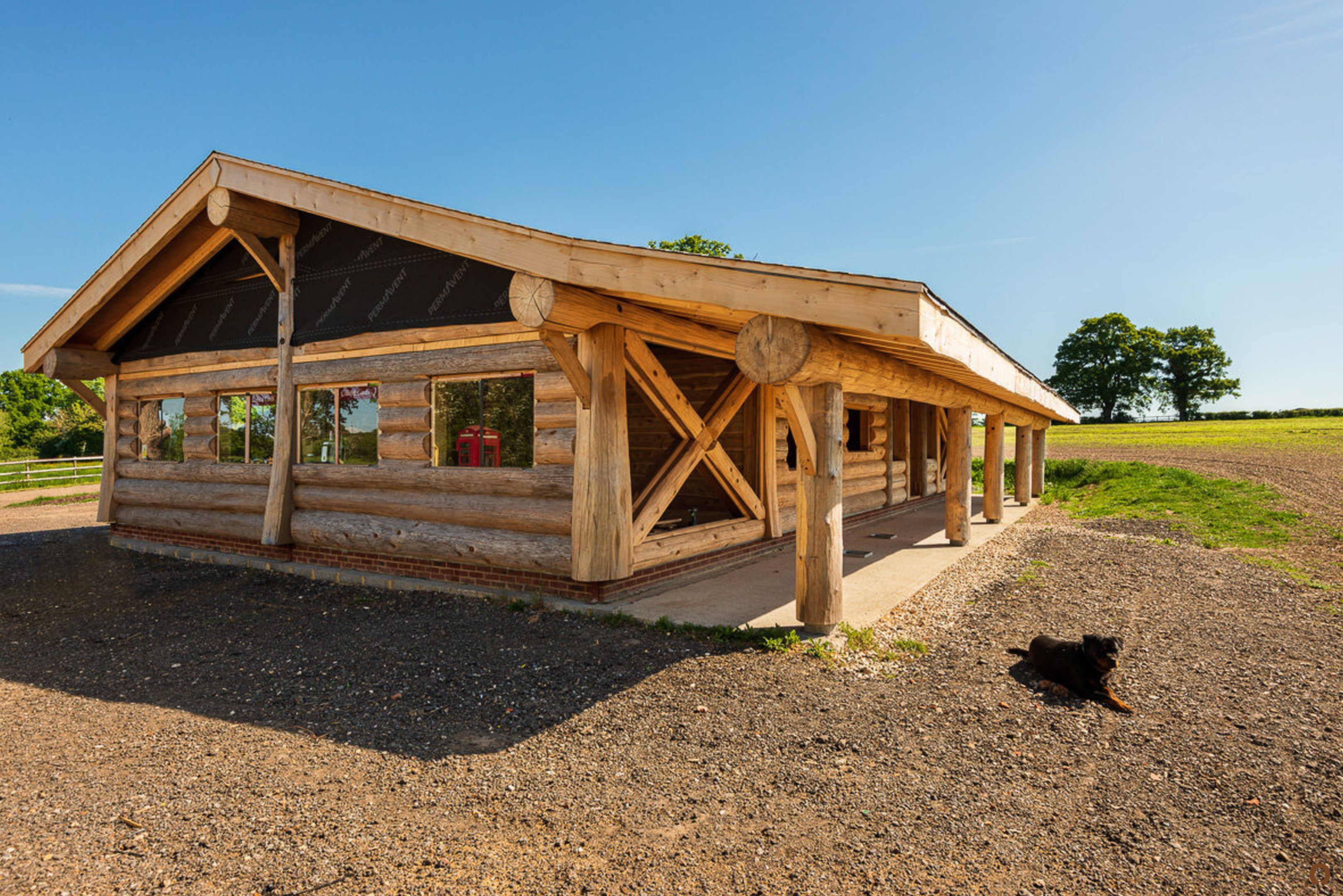
Real logs taper. They bend. Their diameter changes along their length, and no two have exactly the same shape.
You can solve that problem by making the logs uniform, by fitting them individually by hand, or by accurately measuring and working with their actual geometry.
We chose the third option. Taper and natural sweep can remain visible in the finished structure.
The challenge is not making the log straight. The challenge is knowing exactly what shape it has.
Measure the Log We Actually Have
Measure the Log We Actually Have
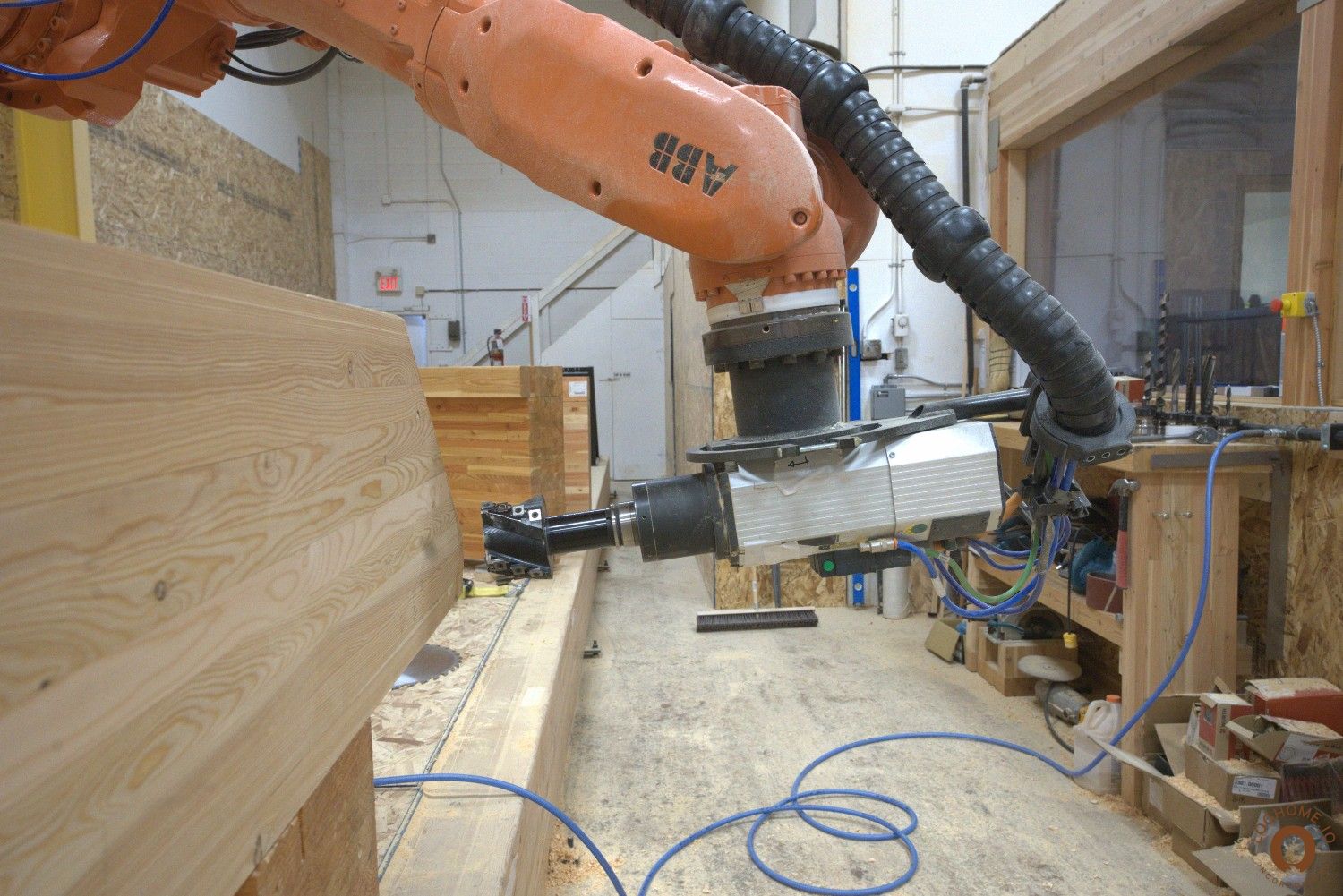
Each log begins as a physical object, not as a nominal diameter in a drawing. We 3D scan its surface and create a digital representation of its actual geometry.
We are not asking the timber to match the computer model. The computer model starts with the timber.
Once the logs exist digitally, they can be positioned and fitted in the structure before machining begins. Their relationships and intersections can be calculated from the actual surfaces.
See how we scan the logsPrecision Where It Matters
Precision Where It Matters
Precision does not require identical parts. It requires knowing the geometry of the parts you are actually working with.
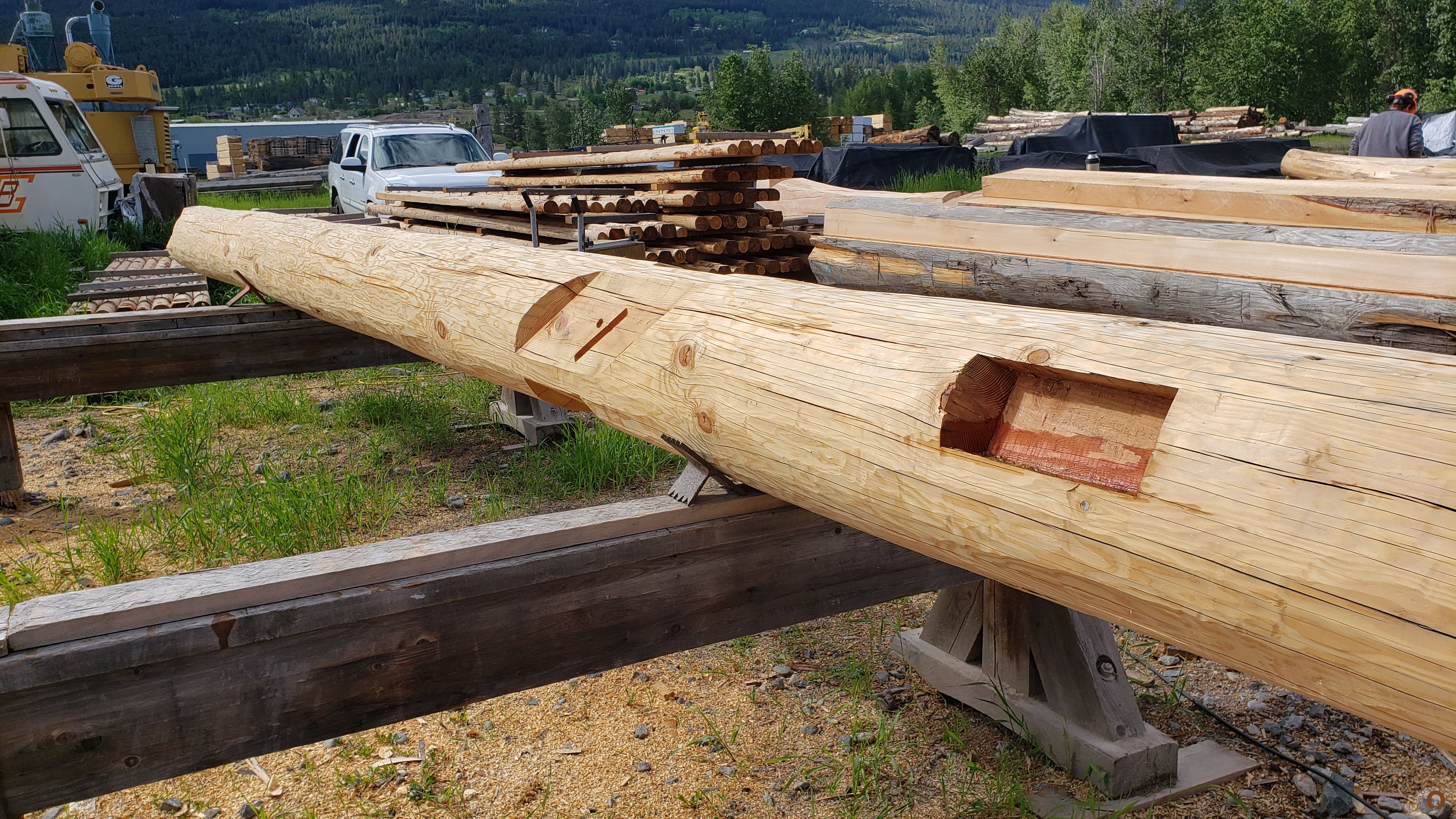
The outside of a log can remain irregular, tapered and unmistakably natural. Precision is applied where the building needs it: grooves, notches, intersections and other manufactured features.
Natural on the outside. Calculated where the logs meet.
The Timber Is Still the Point
The Timber Is Still the Point
There is a lot of technology behind the process, but the goal is not to make the finished building look technological.
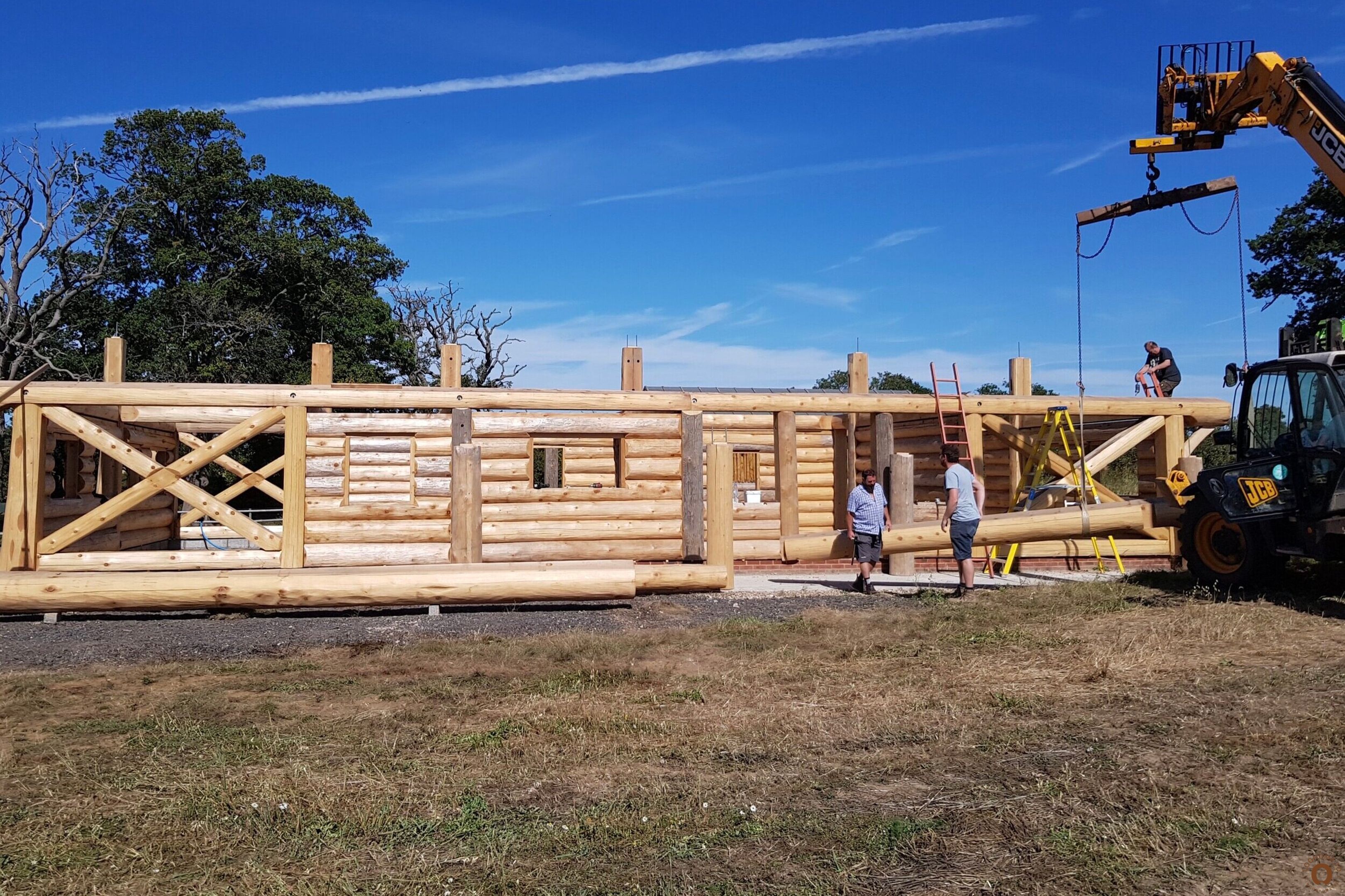
The scanner, software and robots are manufacturing tools. What remains visible is the timber.
There is nothing precise about the way a tree grows. There can be a great deal of precision in what we do with it afterwards.
Next: Compare the three ways of building with logs