Not Smaller. Smarter.
Energy efficiency is often presented as a list of things we should use less of: less space, less heat, less comfort and less energy.
We prefer a different approach.
Not down-sizing. Fit sizing.
Build the space that is actually needed. Then understand how that building behaves and size its energy systems accordingly.
With a substantial log structure, there is another resource available that is easy to overlook:
The building itself can store heat.
A Log Wall Is More Than a Wall
A Log Wall Is More Than a Wall
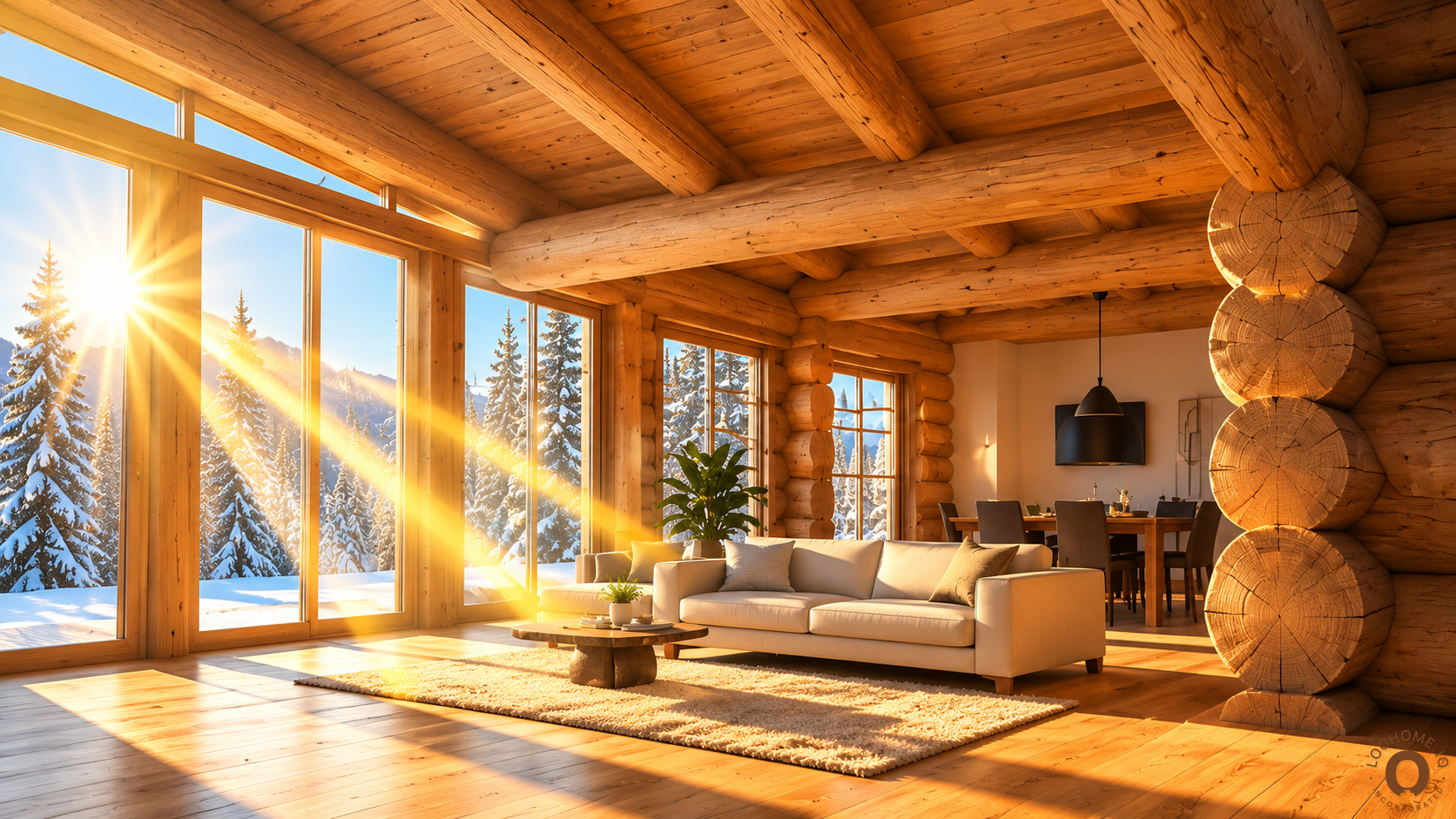
Imagine a sunny winter afternoon.
Sunlight enters through the windows. The heating system is running when energy is readily available. The cabin becomes comfortably warm.
But the air is not the only thing getting warmer.
The floor, furniture and, most importantly, thousands of kilograms of solid wood are also absorbing heat.
When the sun disappears and the outside temperature falls, that stored energy does not suddenly disappear.
The logs slowly release heat back toward the interior.
In other words, the walls can act as a large passive thermal battery.
Heat Storage Does Not Mean Zero Heat Loss
This distinction is important.
Thermal mass does not magically insulate a building and it does not create energy.
Heat will still move toward the colder outdoors.
Good roof and floor insulation, good windows and doors, and especially control of unwanted air leakage remain essential.
Thermal mass does something different: it moderates changes in indoor temperature by absorbing energy when heat is available and releasing energy when the surroundings become cooler.
Think of insulation as helping to keep heat from escaping, while thermal mass provides somewhere to keep heat until it is needed.
Read more about thermal resistanceUse the Day to Prepare for the Night
Use the Day to Prepare for the Night
That creates an interesting opportunity for a small, well-designed log home.
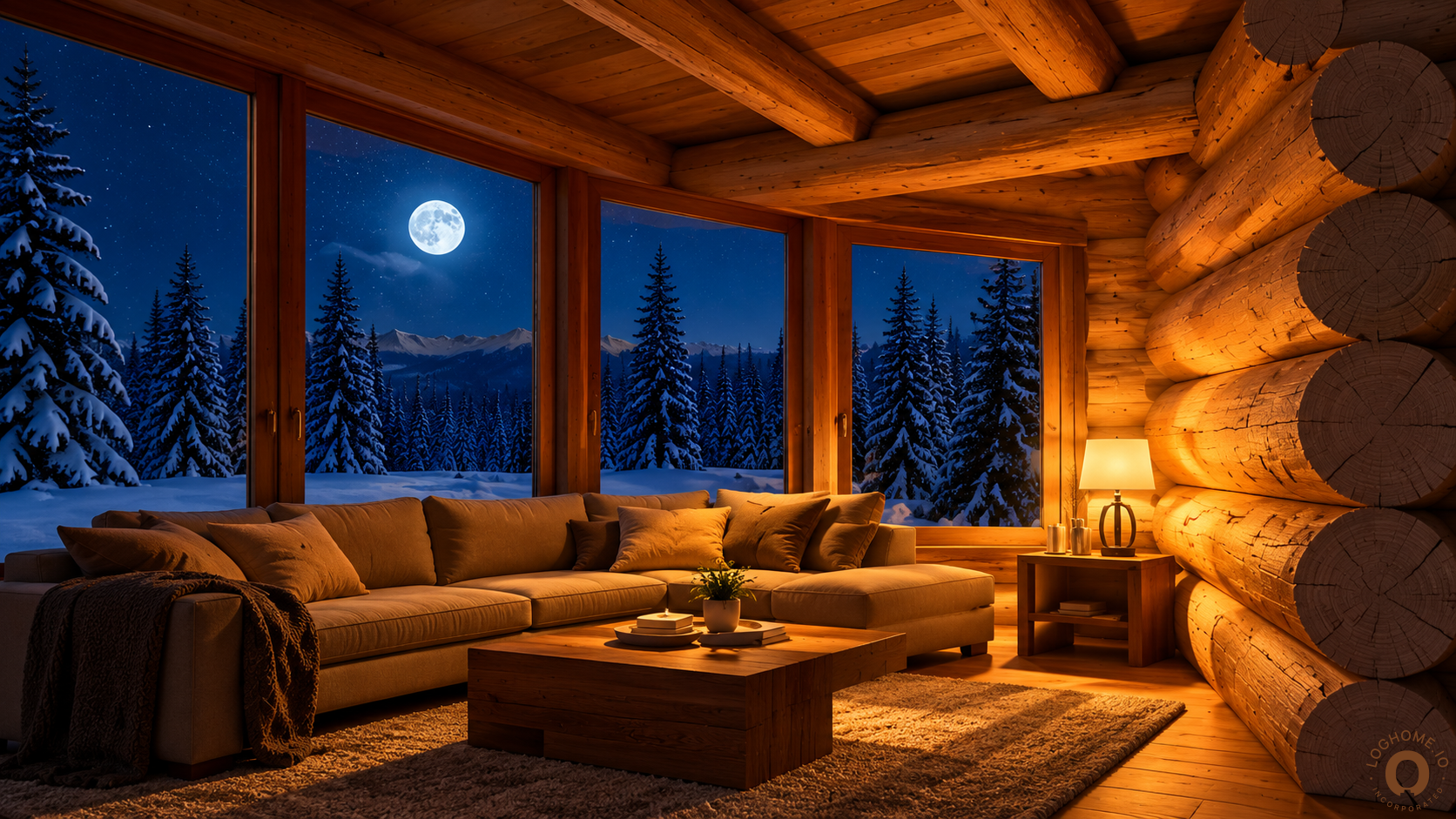
During a sunny winter day, the building can intentionally absorb heat. Solar gain through properly positioned windows contributes directly, while the heating system can operate when energy is readily available.
Instead of trying to maintain exactly the same temperature every minute of the day, the building can be allowed to become slightly warmer while energy is plentiful.
The logs absorb part of that energy.
After sunset, the heating demand can then be partly supplied by energy already stored in the structure.
The objective is not to make the cabin cold overnight.
The objective is to move some of the heating demand to the time of day when energy is easiest to obtain.
Smoother Indoor Temperatures
Thermal mass helps reduce temperature swings between day and night.
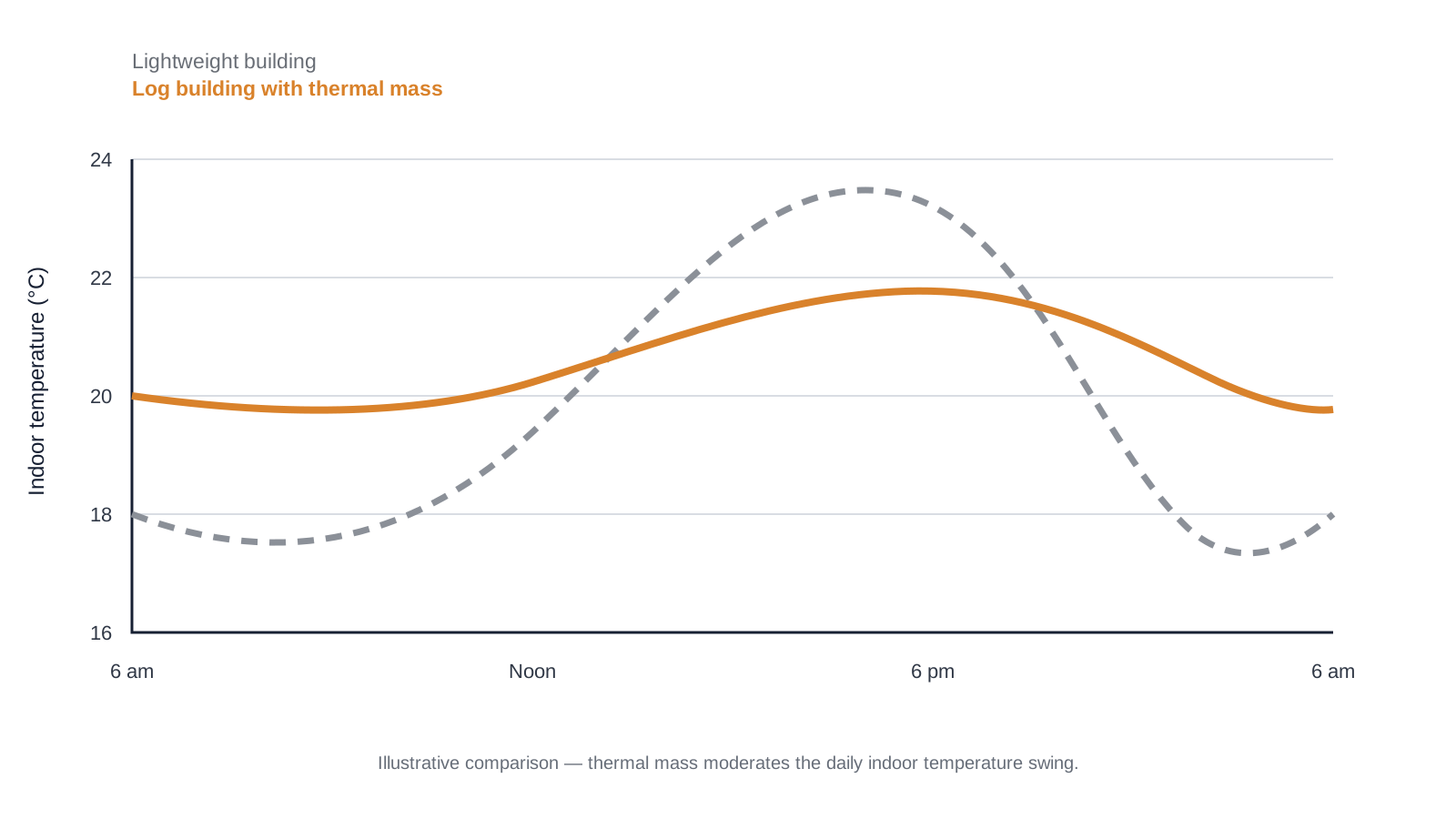
The chart compares indoor temperatures over a 24-hour period, from 6 am through noon and 6 pm to 6 am the following morning.
The vertical axis shows indoor temperature in degrees Celsius (°C), from 16°C to 24°C.
The dashed grey curve represents a lightweight building, while the solid orange curve represents a log building with thermal mass.
A lightweight building can respond quickly to changes in sunlight, heating and outdoor temperature. Its indoor temperature can rise and fall considerably throughout the day.
A building containing several tonnes of wood behaves differently. Heating that mass requires energy, but once warm it also takes time for that mass to cool.
The result can be a slower and smoother change in indoor conditions between a sunny afternoon and a cold winter night.
This is an illustrative comparison showing how thermal mass can moderate daily indoor temperature swings. Actual performance depends on insulation, building design, heating and weather conditions.
Now Let's Put Some Numbers Behind It
Consider a simple example cabin:
- 20 ft × 20 ft interior footprint
- 8 ft wall height
- approximately 14 in average log thickness
- two conventional windows
- one exterior door
- a well insulated roof and floor
Before subtracting openings, the four walls contain approximately:
That is approximately 21 cubic metres of wood before subtracting windows, doors and other openings.
Even after allowing for openings and construction details, a cabin of this size contains many tonnes of solid wood.
That mass matters because changing its temperature requires a measurable amount of energy.
How Much Heat Can That Wood Hold?
The basic calculation is simple:
- \(Q\)
- Stored heat energy
- \(m\)
- Mass of the wood
- \(c\)
- Specific heat capacity of the wood
- \(\Delta T\)
- Temperature change of the wood
For illustration, suppose approximately 8,000 kg of wood participates in the thermal behaviour of the walls and we use a representative specific heat capacity of 1.7 kJ/(kg·K).
If the average temperature of that mass changes by only 3°C:
In other words, a temperature change of only a few degrees in several tonnes of wood represents a surprisingly large amount of thermal energy.
But 11.3 kWh Does Not Mean an 11.3 kWh Battery
This is where we need to be careful with the comparison.
An electrical battery can deliver stored energy through a wire almost immediately.
A log wall cannot.
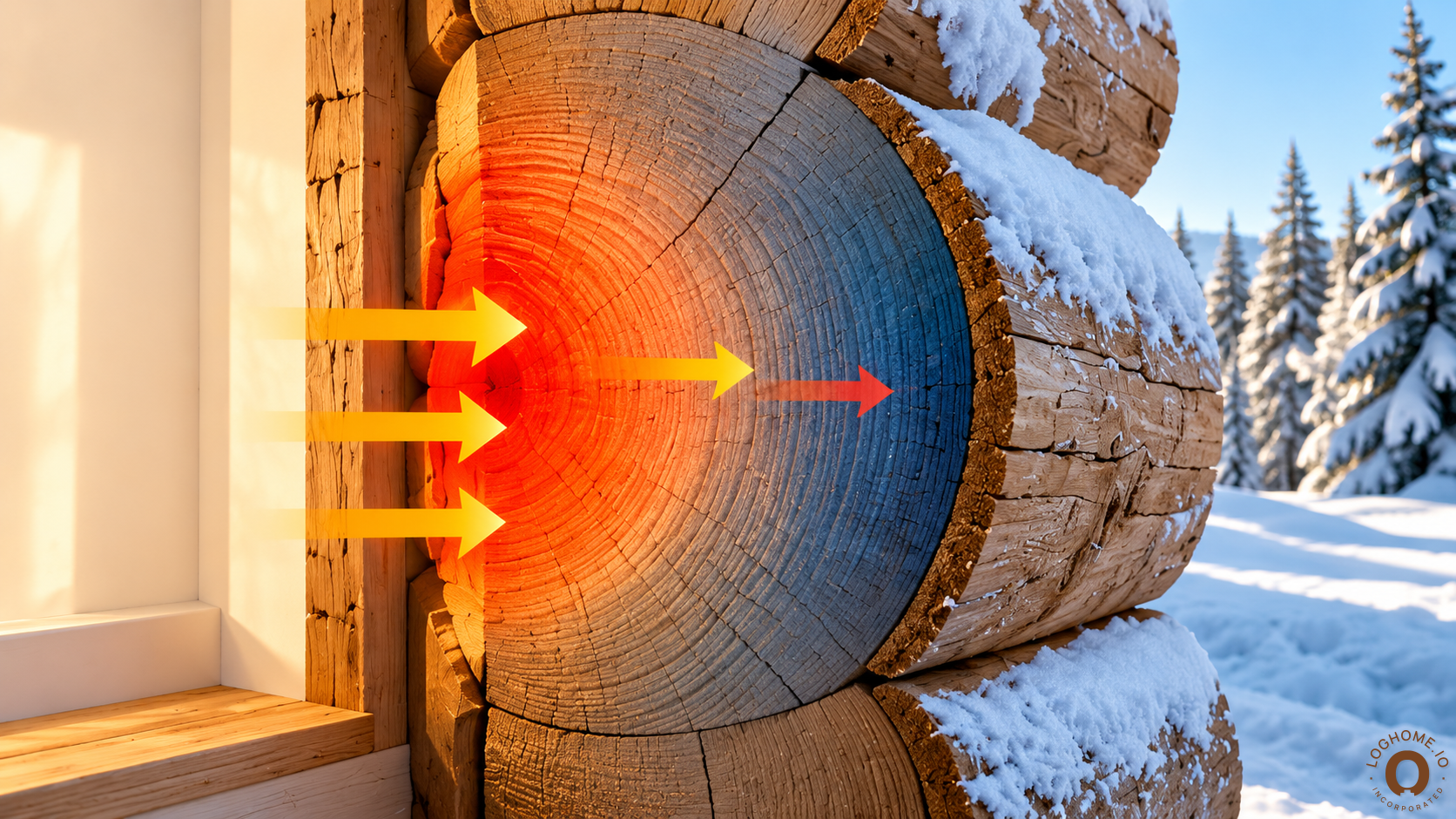
Heat must travel through the wood. The inside surface reacts relatively quickly, while the centre of a thick log changes temperature much more slowly.
We therefore cannot assume that every kilogram of a 14 inch wall participates equally during one winter night.
The calculation above demonstrates the scale of the thermal reservoir. The rate at which that energy can be absorbed and released is a separate question.
The Thick Wall Is Actually Important
A 14 inch log does not change temperature uniformly from one side to the other.
The interior surface responds first. Heat then moves progressively deeper into the wood.
During the night, the process changes direction as the interior begins to cool.
This slow response is one reason thermal mass can help smooth the difference between a sunny afternoon and a cold winter night.
It is not additional R-value.
It is stored thermal energy moving through a substantial mass over time.
Two Different Batteries
An off-grid or energy-independent cabin can therefore have two very different forms of energy storage.
Solar panels can charge an electrical battery for lighting, appliances, controls, pumps and other electrical loads.
At the same time, sunlight and the heating system can put thermal energy into the building itself.
One stores electricity.
The other stores heat.
And if the energy we ultimately need is heat, there can be considerable value in storing some of it as heat rather than converting every available unit of energy into electricity and storing it in an electrical battery.
Fit Sizing the Complete System
This changes the way we can think about the complete home.
The walls, roof, floor, windows, air tightness, solar exposure, heating system and electrical storage do not have to be considered as unrelated components.
They are parts of one energy system.
Once the actual heat loss and thermal behaviour of the building are understood, the heating system, solar system and electrical storage can be sized around what the building actually needs.
Thermal storage can move part of the heating demand from night to day. Solar production can supply electrical loads while sunlight itself contributes directly to heating the structure.
The goal is not simply to make everything smaller.
The goal is to make the different parts work together.
None of this eliminates the laws of physics.
It simply makes better use of them.
Not down-sizing. Fit sizing.